Blessed shalt thou be when thou comest in, and blessed shalt thou be when thou goest out.
- Deuteronomy 28:6

Thursday, April 17, 2014

Simeon, son of Israel (Jacob) - The Man and His House


  Simeon (Hebrew: שִׁמְעוֹן, Modern Shim'on Tiberian Šimʻôn) is the second son of Jacob (latter named by God as Israel) with Leah. He is also the father of the Israelite Tribe of Simeon and the Simeonites.
  The name Simeon means "God has heard."

Genesis 29:33
33 And she conceived again, and bare a son; and said, Because the Lord hath heard I was hated, he hath therefore given me this son also: and she called his name Simeon.

The prophetic blessing of Jacob to Simeon, prior to his death:
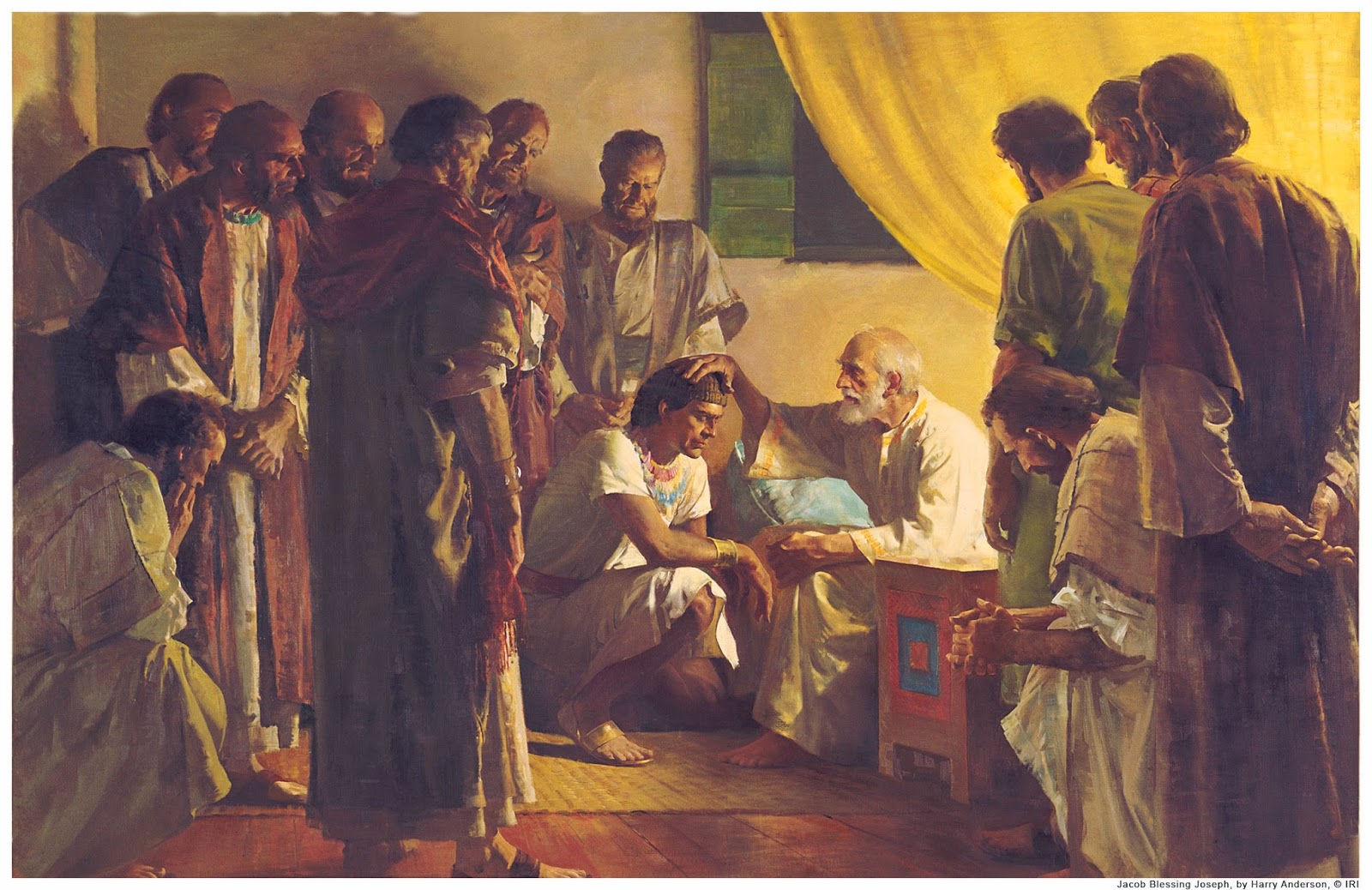

Genesis 49:1-2
1 And Jacob called unto his sons, and said, Gather yourselves together, that I may tell you that which shall befall you in the last days. 2 Gather yourselves together, and hear, ye sons of Jacob; and hearken unto Israel your father.

Genesis 49:5-7
5 Simeon and Levi are brethren; instruments of cruelty are in their habitations. 6 O my soul, come not thou into their secret; unto their assembly, mine honour, be not thou united: for in their anger they slew a man, and in their selfwill they digged down a wall. 7 Cursed be their anger, for it was fierce; and their wrath, for it was cruel: I will divide them in Jacob, and scatter them in Israel.

The Tribe of Simeon

  The Tribe of Simeon (Hebrew: שֵׁבֶט שִׁמְעוֹן, Modern Shevet Shim'on Tiberian Šḗḇeṭ Šimʻôn) is one of the Tribes of Israel.

Joshua 19:1-9
1 And the second lot came forth to Simeon, even for the tribe of the children of Simeon according to their families: and their inheritance was within the inheritance of the children of Judah. 2 And they had in their inheritance Beersheba, and Sheba, and Moladah, 3 And Hazarshual, and Balah, and Azem, 4 And Eltolad, and Bethul, and Hormah, 5 And Ziklag, and Bethmarcaboth, and Hazarsusah, 6 And Bethlebaoth, and Sharuhen; thirteen cities and their villages: 7 Ain, Remmon, and Ether, and Ashan; four cities and their villages: 8 And all the villages that were round about these cities to Baalathbeer, Ramath of the south. This is the inheritance of the tribe of the children of Simeon according to their families. 9 Out of the portion of the children of Judah was the inheritance of the children of Simeon: for the part of the children of Judah was too much for them: therefore the children of Simeon had their inheritance within the inheritance of them.

Wednesday, April 16, 2014

Reuben, son of Israel (Jacob) - The Man and His House


  Reuben (Hebrew: רְאוּבֵן‎, Modern Re'uven Tiberian Rəʾûḇēn) is the first and eldest son of Jacob (latter named as Israel) with Leah. He is also the father of the Israelite Tribe of Reuben and the Reubenites.
  The name Reuben means "see a son."

Genesis 29:32
32 And Leah conceived, and bare a son, and she called his name Reuben (Reuven): for she said, Surely the Yah hath looked upon my affliction; now therefore my husband will love me.

The prophetic blessing of Jacob to Reuben, prior to his death:


Genesis 49:1-4
1 And Jacob (Ya’akov) called unto his sons, and said, Gather yourselves together, that I may tell you that which shall befall you in the last days. 2 Gather yourselves together, and hear, ye sons of Jacob (Ya’akov); and hearken unto Israel your father. 3 Reuben (Reuven), thou art my firstborn, my might, and the beginning of my strength, the excellency of dignity, and the excellency of power: 4 Unstable as water, thou shalt not excel; because thou wentest up to thy father's bed; then defiledst thou it: he went up to my couch.

The Tribe of Reuben

  The Tribe of Reuben (Hebrew: שֵׁבֶט רְאוּבֵן, Modern Shevet Re'uven Tiberian Šḗḇeṭ Rəʼûḇēn) is one of the Tribes of Israel.

Joshua 13:15-23
15 And Moses (Moshe) gave unto the tribe of the children of Reuben (Reuven) inheritance according to their families. 16 And their coast was from Aroer, that is on the bank of the river Arnon, and the city that is in the midst of the river, and all the plain by Medeba; 17 Heshbon, and all her cities that are in the plain; Dibon, and Bamothbaal, and Bethbaalmeon, 18 And Jahaza, and Kedemoth, and Mephaath, 19 And Kirjathaim, and Sibmah, and Zarethshahar in the mount of the valley, 20 And Bethpeor, and Ashdothpisgah, and Bethjeshimoth, 21 And all the cities of the plain, and all the kingdom of Sihon king of the Amorites, which reigned in Heshbon, whom Moses smote with the princes of Midian, Evi, and Rekem, and Zur, and Hur, and Reba, which were dukes of Sihon, dwelling in the country. 22 Balaam also the son of Beor, the soothsayer, did the children of Israel slay with the sword among them that were slain by them. 23 And the border of the children of Reuben was Jordan, and the border thereof. This was the inheritance of the children of Reuben after their families, the cities and the villages thereof.

Monday, April 14, 2014

The Ten Lost Tribes


  When we're talking about the Ten Lost Tribes, we're talking about the Tribes of Ancient Israel that were deported from the Kingdom of Israel after it was conquered by Assyria in about 722 BC. We espouse a millenarian view that the Tribes will return.
  The Hebrew Bible does not use the expression "Ten Lost Tribes", leading some people to question the number of tribes involved. However, the passage in 1 Kings, chapter 11, verse 31 and 35, states that kingdom would be taken from Solomon and that would be given ten tribes to Jeroboam:

1 Kings (Melachim Alef) 11:31
31 And he said to Jeroboam (Yarov‘am), Take thee ten pieces: for thus saith Yah Elohei Yisrael (of Israel), Behold, I will rend the kingdom out of the hand of Solomon (Sh’lomo), and will give ten tribes to thee:

1 Kings (Melachim Alef) 11:35
35 But I will take the kingdom out of his son's hand, and will give it unto thee, even ten tribes.

The Ten Lost Tribes and the New Testament

  Within the New Testament we can verify that exists some evidence of a continuing identification in later centuries of individual Israelites to the Lost Tribes. For example, in Luke 2:36, an individual is identified with the tribe of Asher.

Luke (Lukas) 2:36
36 And there was one Anna, a prophetess, the daughter of Phanuel, of the tribe of Asher: she was of a great age, and had lived with an husband seven years from her virginity;

The Ten Lost Tribes and the Jewish Tradition

  There are numerous references to the Lost Tribes in biblical writings. In Ezekiel 37:16-17; the prophet is told to write on one stick (an ancient reference to scrolls) "For Judah..." and on the other "For Joseph..." (the main Lost Tribe). The prophet is then told that these two groups shall be someday reunited. See the biblical passage below:

Ezekiel (Yechezkel) 37:16-17
16 Moreover, thou son of man, take thee one stick, and write upon it, For Judah (Yehudah), and for the children of Israel his companions: then take another stick, and write upon it, For Joseph (Yosef), the stick of Ephraim (Ephrayim) and for all the house of Israel his companions: 17 And join them one to another into one stick; and they shall become one in thine hand.

  There are also discussions in the Talmud as to whether the ten lost tribes will eventually be reunited with the Tribe of Judah, that is, with the Jewish people.

The Ten Lost Tribes and the Beta Israel of Ethiopia

  The Beta Israel are Ethiopian Jews. Some members of the Beta Israel, as well as several Jewish scholars, believe that they are descended from the lost Tribe of Dan.
  Early DNA studies showed they were descended from Ethiopians, but in the 21st century, new studies have shown possible connection to a few Jews of the 4th to 5th century

The Ten Lost Tribes and the Igbo Jews of Nigeria

  The Igbo Jews of Nigeria claim descent variously from the tribes of Levi, Naphtali, Gad, Zebulun and Joseph (Manasseh and Ephraim).